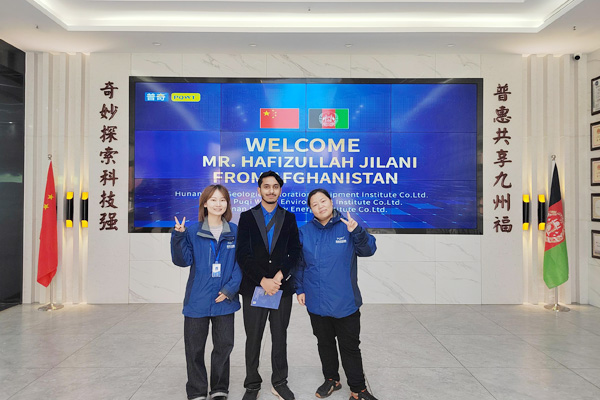

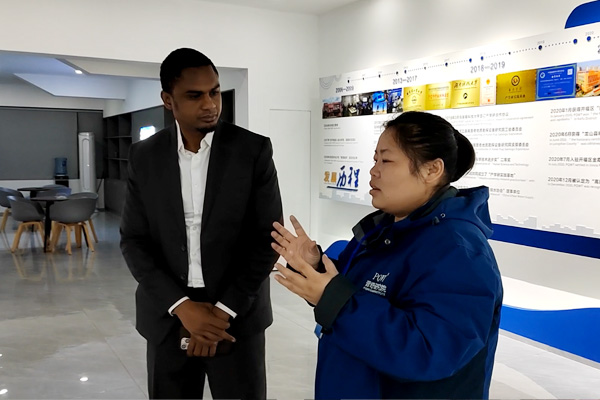
As infrastructure development and water resource exploration continue to grow across Africa, leak detection equipment and water finding instruments are becoming essential tools for pipeline maintenance and groundwater exploration. Mr. Ahmadou Ka, a client from Senegal, visited in person to gain a deeper understanding of these instruments and to prepare for future market promotion and agency cooperation in his local market.
1. Visit Background: From Product Understanding to Market Planning
Mr. Ahmadou Ka has long been concerned with pipeline leakage detection and groundwater exploration. In Senegal, aging urban water supply networks and uneven groundwater distribution create practical challenges for construction and daily water supply management. Traditional inspection methods are often inefficient and costly, while professional leak detection equipment and water finding instruments can significantly improve accuracy and efficiency.
The main purpose of this visit was to systematically learn the working principles and operating methods of leak detection equipment and water finding instruments, and to evaluate their stability and suitability for local applications, laying a solid foundation for future market development.
2. Comprehensive Tour: Understanding Products and Capabilities
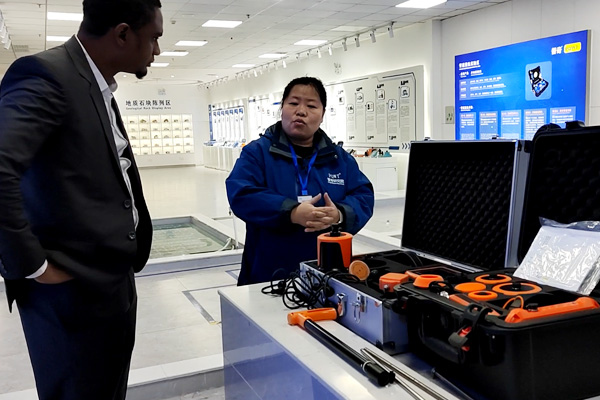
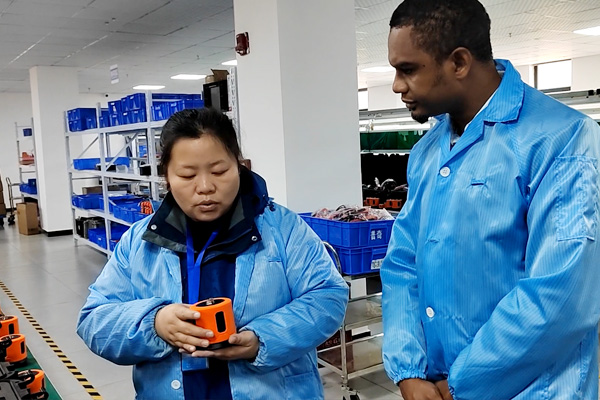
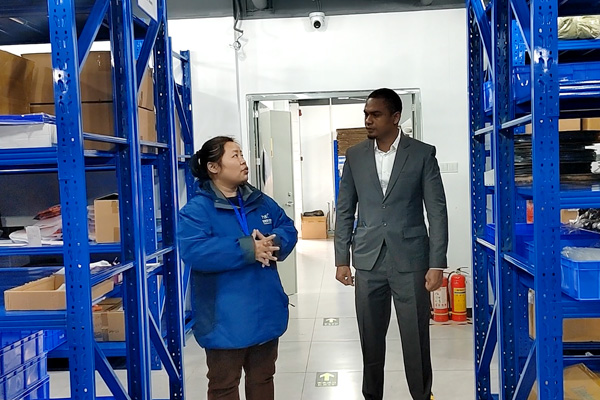
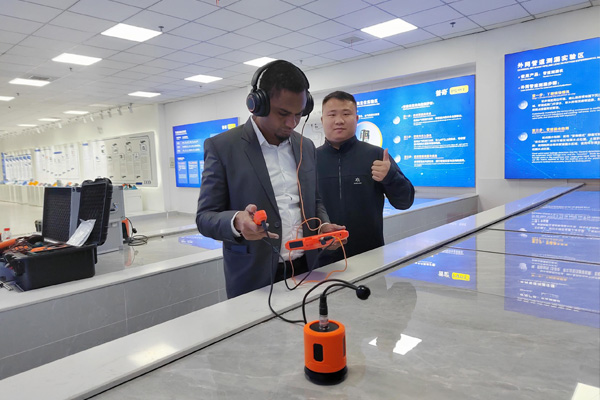
Accompanied by business staff, the client toured the product showroom, production workshop, warehouse, and R&D department. Through on-site explanations and hands-on demonstrations, he gained an intuitive understanding of the structure, functions, and application scenarios of different models of leak detection equipment and water finding instruments.
In the showroom, various leak detection instruments designed for metal pipes, plastic pipes, and buried pipelines were introduced. The water finding instruments covered applications ranging from shallow water detection to deep groundwater exploration. The client paid particular attention to anti-interference performance and operational convenience, which are critical factors in real engineering projects.
The factory and warehouse visits further strengthened his confidence in product quality control, supply capacity, and long-term cooperation.
3. Theoretical Training: Building a Strong Foundation
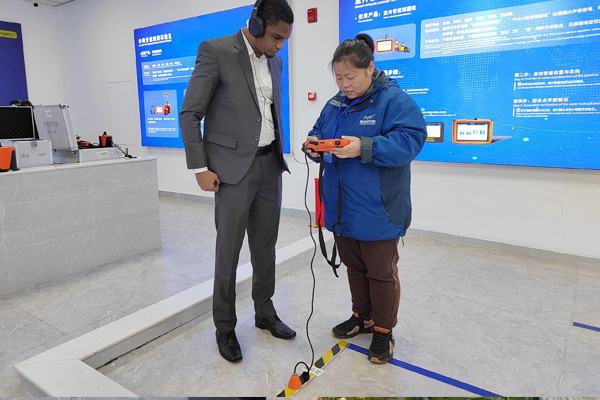
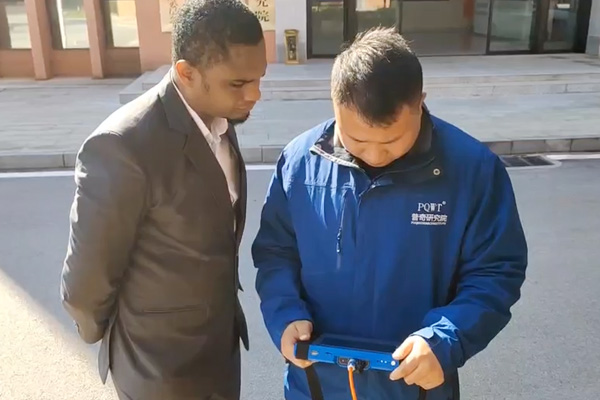
Before hands-on practice, technical staff provided systematic theoretical training. The training focused on the working principles, signal identification methods, common application scenarios, and operational precautions of both leak detection equipment and water finding instruments. The explanations were clear and practical, supported by real application examples.
For leak detection equipment, the training emphasized signal differences under various pipe materials and pressure conditions. For water finding instruments, the sessions covered groundwater occurrence conditions, anomaly signal interpretation, and basic data analysis methods. This approach helped the client understand not only how to operate the instruments, but also how to apply them effectively in real projects.
4. Hands-On Practice: Gaining Confidence Through Operation
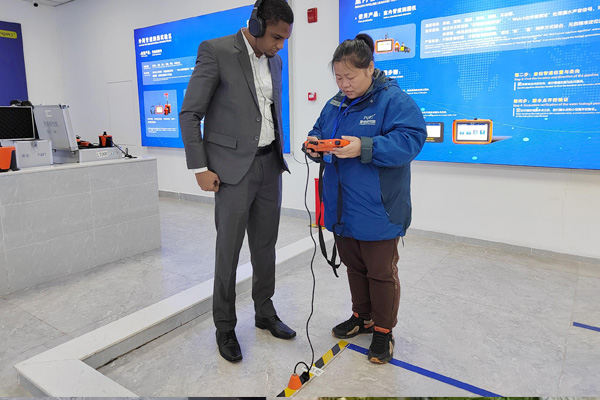
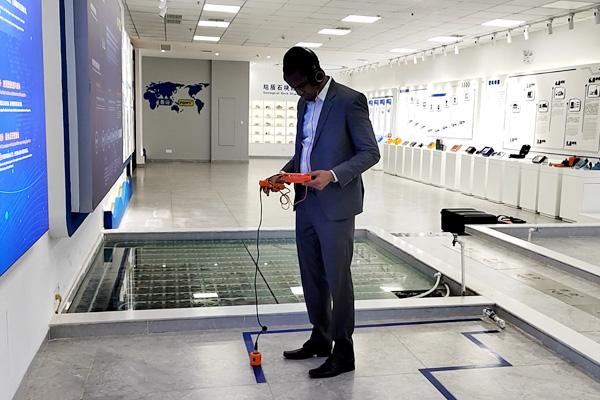
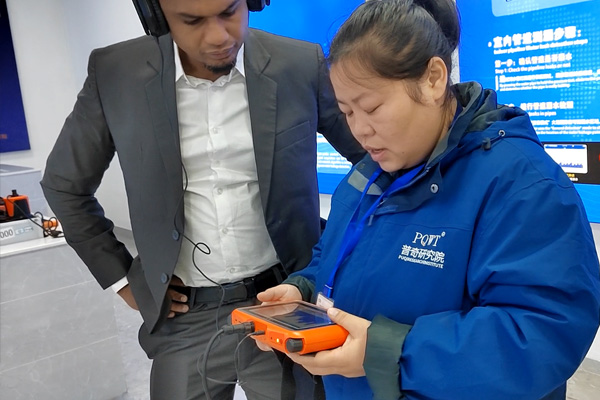
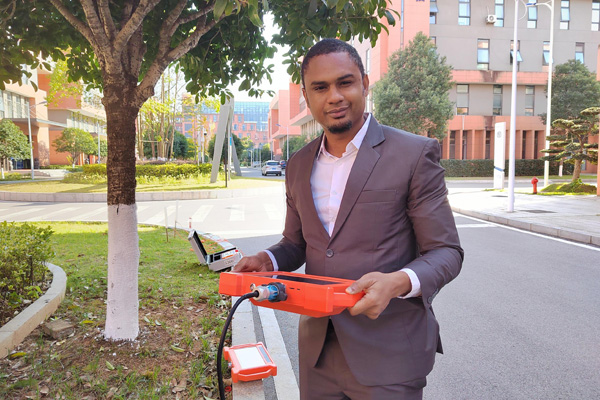
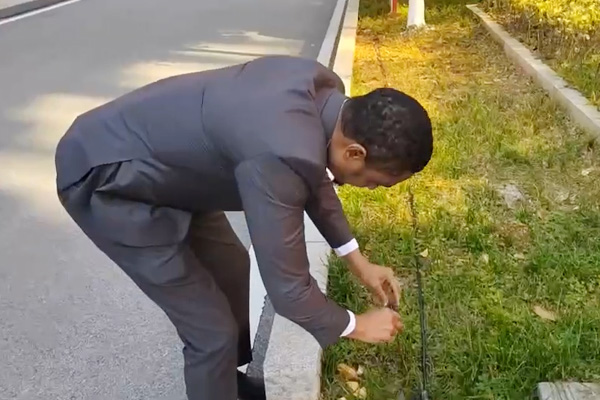
After the theoretical training, the client participated in on-site hands-on practice under the guidance of technical engineers. From instrument setup and parameter adjustment to signal acquisition and result analysis, the client operated the equipment personally throughout the entire process.
During leak detection practice, he was able to clearly identify signal differences between normal pipeline sections and leakage points. In water finding practice, he gradually mastered survey point arrangement and result interpretation. After several rounds of operation, he became familiar with the overall workflow and practical application of both instruments.
He noted that this combination of explanation and practice allows even new users to quickly learn how to use leak detection equipment and water finding instruments effectively after proper training.
5. Training Results: From Skill Mastery to Cooperation
Through a complete process of visits, training, and practice, Mr. Ahmadou Ka became capable of independently operating leak detection equipment and water finding instruments for basic detection tasks. After fully recognizing the product performance and training system, he completed a purchase and plans to take the instruments back to Senegal to train his own team and promote their application locally.
He expressed confidence that leak detection equipment will play an important role in pipeline maintenance and water supply system inspection, while water finding instruments offer strong potential in water resource exploration and pre-construction surveys.
6. Conclusion: Professional Training Expands Global Applications
From initial understanding to hands-on mastery and successful cooperation, this visit was not only a product demonstration, but also an in-depth technical exchange. Through systematic training and real-world practice, the client gained a practical understanding of the real value of leak detection equipment and water finding instruments beyond technical specifications.
As global demand for infrastructure management and water resource development continues to grow, reliable, professional, and user-friendly leak detection equipment and water finding instruments are playing an increasingly important role in international markets, providing effective solutions for engineering detection and water resource exploration worldwide.