
Pipeline leaks are a common issue in residential and commercial water systems, especially in areas where pipes are buried underground. In many cases, early signs such as damp surfaces, unexplained water loss, or pressure drops can indicate a leak, but identifying the exact location is often far more challenging.
This case from Malta highlights how a structured detection approach and the use of a professional pipeline leak locator helped technicians accurately locate a hidden leak while avoiding unnecessary excavation.
1. Background: A Leak Without a Clear Source
The project took place in a residential area in Malta, where the property owner noticed persistent moisture on the ground and a steady increase in water consumption. Despite these warning signs, there were no visible cracks or surface damage that could clearly point to the source of the problem.
The water supply pipes in this area were installed underground and had been in service for many years. Due to the pipe layout and burial depth, traditional methods such as visual inspection or random excavation would have been time-consuming, costly, and disruptive to daily life.
To reduce risk and limit damage, the maintenance team decided to carry out a professional pipeline leak detection survey before any repair work began.
2. Choosing a Non-Invasive Detection Method
After evaluating the site conditions, the technicians determined that the surrounding environment was suitable for acoustic leak detection. Background noise was relatively low, and the pipe material allowed leak signals to travel effectively along the pipeline.
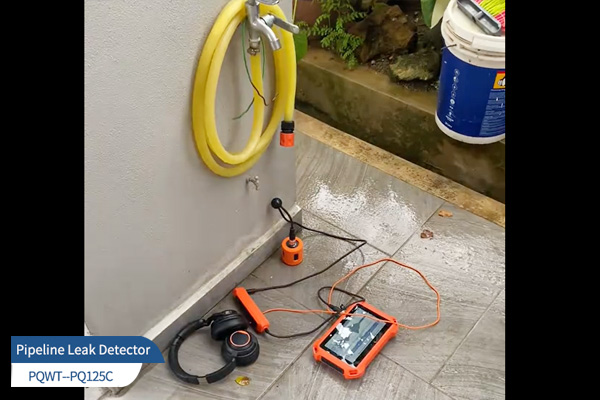
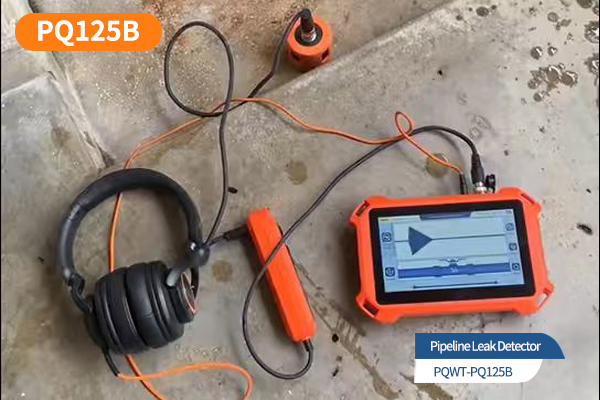
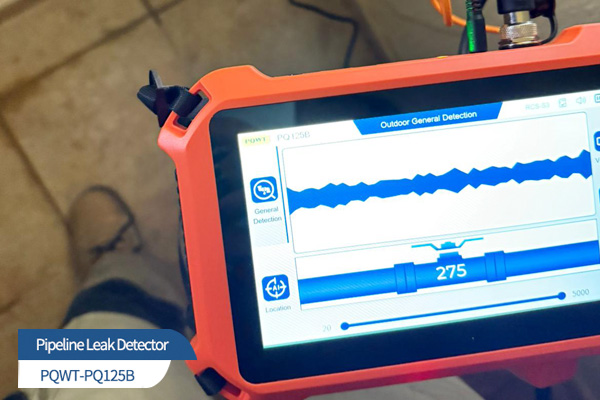
For this task, the team used the PQWT-PQ125B pipeline leak locator to scan the suspected pipeline route. The goal was to identify abnormal signal patterns that could indicate a leakage point and narrow down the inspection area as much as possible before excavation.
This approach allowed the team to work methodically, reducing uncertainty and improving confidence in the final diagnosis.
3. On-Site Detection Process
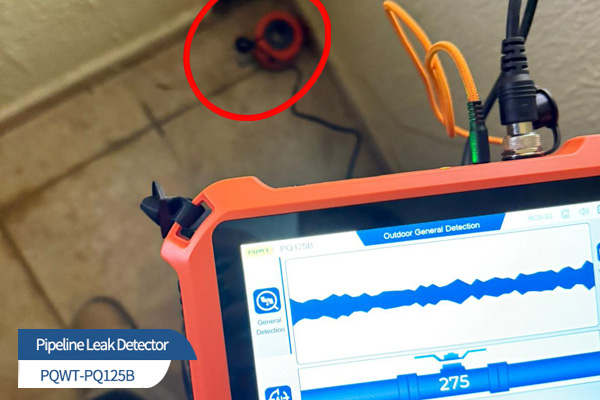
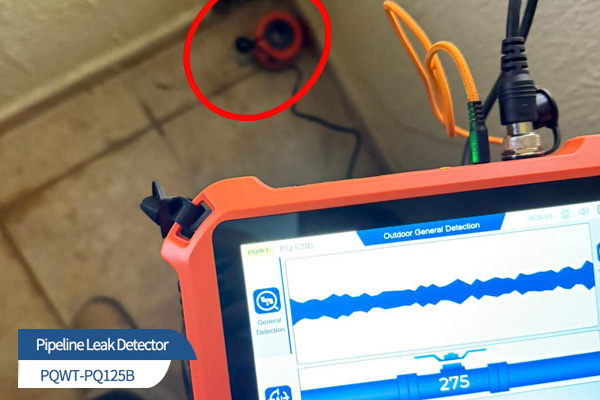
The detection process began with a survey along the pipeline path. Measurement points were selected at regular intervals to ensure consistent coverage. At each point, the device collected and analyzed signal data, allowing technicians to compare variations along the line.
As the inspection progressed, one section of the pipeline showed noticeably different signal characteristics compared to surrounding areas. The signal intensity and stability in this zone matched typical features associated with pipeline leakage.
To confirm the findings, technicians conducted repeated measurements around the suspected location. Each test produced consistent results, reinforcing the conclusion that the leak was concentrated within a small, well-defined area.
The clear feedback from the detection process made it easier for the team to make decisions on-site without relying on guesswork or assumptions.
4. Verification Through Targeted Excavation
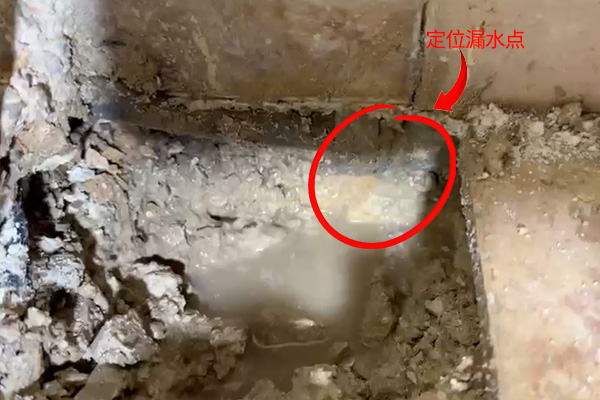
Once the detection work was completed, the results were shared with the property owner and the repair team. Based on the identified location, a targeted excavation was carried out instead of opening a large section of the ground.
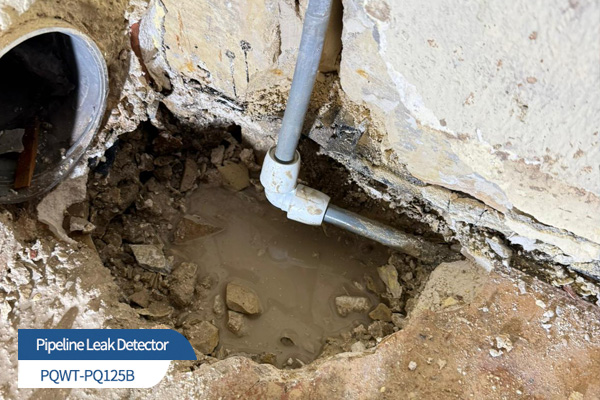
When the pipeline was exposed, the leak was found very close to the marked detection point. The damaged section of the pipe showed clear signs of water escape, confirming the accuracy of the initial diagnosis.
Because the excavation area was limited, repair work was completed quickly, and surface restoration was minimal. This significantly reduced labor time and overall repair costs.
5. Practical Benefits Observed in the Project
This case demonstrates several practical advantages of using a structured pipeline leak detection approach:
Reduced excavation area, minimizing damage to surrounding surfaces
Faster fault identification, shortening the overall repair timeline
Lower maintenance costs, by avoiding unnecessary digging
Improved decision-making, based on measurable data rather than assumptions
For both technicians and property owners, these benefits translate into smoother project execution and more predictable outcomes.
6. Why Accurate Leak Detection Matters
In many pipeline systems, leaks develop gradually and remain unnoticed until they cause visible damage or significant water loss. Without accurate detection, repairs often rely on trial and error, which can lead to repeated excavation and higher long-term costs.
Using a professional pipeline leak locator allows maintenance teams to identify problems at an early stage and focus their efforts precisely where they are needed. This approach is particularly valuable in urban areas, residential communities, and locations where surface restoration is expensive or disruptive.
7. Conclusion: A Reliable Solution for Real-World Conditions
The Malta pipeline leak detection case shows how combining practical experience with reliable detection tools can deliver accurate and efficient results. By identifying the leak location before excavation, the team was able to resolve the issue quickly while minimizing disruption to the property and its occupants.
For professionals involved in pipeline inspection, maintenance, or water system management, cases like this highlight the importance of accurate, non-invasive detection methods in modern infrastructure work.